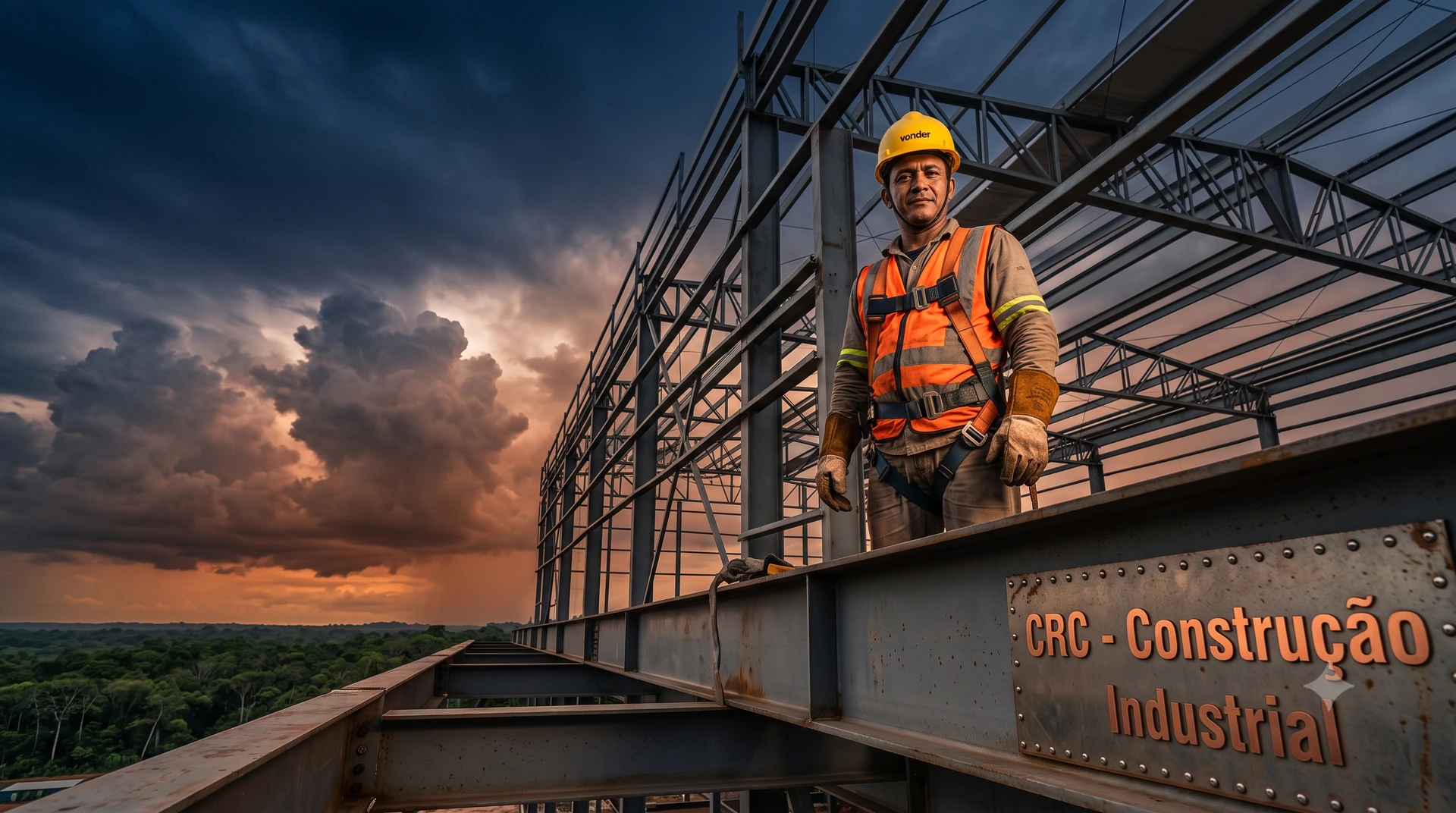
✦ ISO 9001:2015 PBQP-H Level A

Precision industrial
engineering for
the world's largest.

Certified technical partner to the leaders of the Manaus Industrial Pole (PIM). Projects delivered for Samsung, Foxconn, Panasonic and BMW.

✦ Industrial Civil Construction PBQP-H Level A

Large-scale projects
delivered with
absolute technical rigor.

Mid- and large-scale industrial structures, with schedule control, quality assurance and a specialized team. From design to handover, with no improvisation.

✦ HVAC and Climate Control ISO 9001:2015

Precision industrial
climate control for
critical production lines.

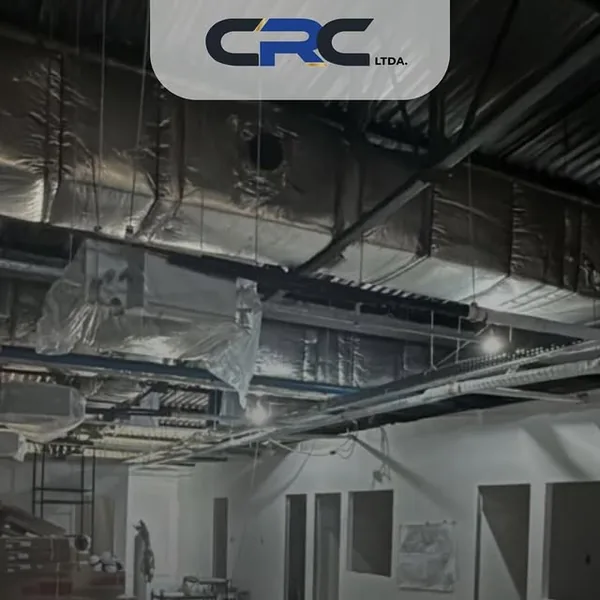
Installation and commissioning of industrial HVAC systems. Strict thermal tolerance for electronics, automotive and pharmaceutical plants in the Manaus Industrial Pole (PIM).

✦ NR-10 · NR-12 · NR-35 (Brazilian regulatory safety standards) Zero accidents

Industrial maintenance
with the plant in
full operation.

A certified team performs predictive and corrective maintenance without interrupting your production line. Documented procedures, proven safety.

✦ High and Medium Voltage NR-10 Certified

Electrical infrastructure
for high-demand
industry.

Design and installation of substations, medium-voltage switchgear and distribution systems for plants with ISO requirements. Commissioning with zero margin for error.

Approved technical partner

The world's leading industries of the Manaus Free Trade Zone trust CRC

Multinationals that allow no margin for error choose CRC for their critical works. This is our strongest technical endorsement.

HondaLGBMWMusashiSamsungFoxconnPanasonicAstemoGrupo Transire
AngstromStanley
Work on active plants, without stopping your production
Complete engineering: civil, electrical, HVAC and maintenance
Technical partner of the largest industries in the Manaus Industrial Pole (PIM)
Delivery with a technical lead and a complete project dossier

Technical partner of the industries
of the Manaus Industrial Pole (PIM).

CRC Servicos de Engenharia was born from a clear vision: to be the technical partner that the multinationals of the Manaus Industrial Pole (PIM) could not find in the local market.

CRC serves multinationals in the Manaus Industrial Pole, such as Samsung, Foxconn, Panasonic, BMW and Grupo Transire. Each contract requires formal certifications, rigorous bidding processes and multidisciplinary technical teams.

We operate with a multidisciplinary technical team: civil engineers, an architect, project analysts, site coordinators and procurement and logistics support, backed by the Obra Prima system.

Carlos Rangel Cristino
CEO and Founder, CRC Servicos de Engenharia

"Our goal is not to be the largest construction company in Manaus. It is to be the most qualified for those who need technical precision and a guaranteed delivery."

ISO 9001
International Quality Management with independent auditing and documented processes
PBQP-H A
The highest level required by the largest projects and contractors in the country (PBQP-H, the Brazilian construction quality program); fewer than 3% of construction companies hold it
Technical commitment

Compliance, quality and governance.

The pillars that support every CRC project, from formal technical backing to transparency in the client relationship.

01

Technical responsibility

Every project comes with an ART (Brazilian technical responsibility annotation) registered with CREA (Brazil's engineering professional council) and a responsible engineer. Nothing is executed without formal technical backing.

02

Regulatory safety

Application of the regulatory standards (NR-10, NR-12, NR-18 and NR-35, Brazilian regulatory safety standards) across all work fronts. A trained team, zero improvisation.

03

Documented quality

Quality control by phases, with as-built records and a technical handover dossier. Procedures aligned with ISO 9001 and PBQP-H guidelines.

04

Governance and ethics

Code of conduct, anti-corruption policy and transparency in the relationship with client and supplier, from the quote to delivery.

Purpose and Values

The principles that guide every decision and every project at CRC

Mission

To deliver industrial engineering projects with technical excellence, safety and on-time completion, generating sustainable value for clients and communities in the Manaus Industrial Pole (PIM).

Vision

To be recognized, by 2030, as the most trusted industrial engineering company in Northern Brazil, with a consolidated presence in the region's main industrial parks across the Amazon.

Values

  • Safetyfirst, always
  • Qualityverifiable, not just stated
  • Commitmentto deadlines and scope
  • Transparencyin business relationships
  • Innovationcontinuous, in both technique and process

Certifications and Regulatory Standards

International standard of quality and legal compliance in every project

ISO 9001

Quality Management

International certification attesting to CRC's Quality Management System, ensuring standardized processes, traceability and continuous improvement across every project delivered.

NR-10

Safety in Electrical Installations

Full compliance with NR-10 (Brazilian regulatory safety standard), which sets out the minimum requirements to ensure the safety and health of workers who interact with industrial electrical installations.

NR-12

Safety in Machinery and Equipment

Compliance with NR-12, which defines technical references and protective measures to safeguard the health and physical integrity of workers during the assembly, operation, and maintenance of machinery.

NR-18

Working Conditions in Construction

Rigorous implementation of working conditions and the working environment in the civil construction industry, including PCMAT (construction site health and safety plan), collective protections, personal protective equipment, and mandatory training for the entire site team.

NR-35

Work at Heights

Compliance with the standard that establishes the minimum requirements and protective measures for work at heights, covering the planning, organization, and execution of tasks performed more than two meters above the lower level.

NR-33

Confined Spaces

Compliance with the standard that establishes the minimum requirements for identifying confined spaces and for recognizing, assessing, monitoring, and controlling the risks present in these work situations.

Compliance and Governance

Code of Ethics

Ethical conduct is a non-negotiable requirement at CRC, applied to all employees, suppliers, and business partners.

Anti-Corruption Policy

Compliance with the Brazilian Anti-Corruption Law (Law 12,846/2013), with internal procedures for control and accountability.

SESMT

SESMT (Brazilian specialized service for occupational safety engineering and medicine), structured and active across all work fronts.

Industrial Construction in Focus

Technical content for those who contract, specify, or carry out industrial projects

What is industrial construction

Industrial construction is the set of engineering activities aimed at designing, building, and adapting physical facilities for productive purposes: factories, manufacturing warehouses, processing plants, substations, distribution centers, and infrastructure supporting industrial operations.

Unlike residential or commercial construction, an industrial project is driven by process requirements. The design begins with the equipment, the production flow, and the operational safety standards, and the building is conceived to house and support that system. This determines structural choices, ceiling height, floor loads, maintenance routes, and utility systems.

In the Manaus Industrial Pole, this particularity is amplified by the diversity of segments present: consumer electronics, automotive, motorcycles, beverages, and two-wheelers, each with its own technical requirements for layout, climate control, electrical protection, and access control. The contracted engineering company must understand these specifics to enter the plant without interrupting production and to deliver within scheduled shutdown windows.

CRC has built up experience in this environment, having carried out projects for Samsung, Foxconn, Panasonic, and Astemo without unplanned interruptions to the clients' production lines.

Industrial assembly versus civil construction

Confusion between industrial assembly and civil construction is common, but the two concepts have distinct scopes, standards, and professionals. Understanding the difference is essential when contracting and when drafting the scope of a tender.

Industrial civil construction refers to the physical works: foundations, concrete or steel structures, masonry, roofing, industrial flooring, plumbing, electrical, and fire-fighting installations. The end product is the built environment.

Industrial assembly, in turn, is the installation of equipment and systems within that environment: production lines, conveyors, compressors, boilers, process piping, industrial ventilation systems, and control panels. The end product is an operational plant.

The two scopes often overlap in schedule: the equipment installer needs the industrial floor finished and leveled, the electrical connections ready, and the utility piping accessible. Coordination failures between the two fronts are the leading cause of delay in greenfield and brownfield projects in Brazil.

Companies like CRC that work in civil construction inside industrial plants must master this interface, communicating directly with the client's integrators and process engineers to ensure that the sequence of partial deliveries enables assembly without rework.

NR-18: safety in industrial construction

NR-18 (Brazilian regulatory safety standard) establishes the working conditions and working environment in the construction industry. It applies to any civil engineering project, regardless of size, and defines the employer's responsibilities, training obligations, collective protection standards, and occupational health requirements.

The main instruments provided for in NR-18 are the Program of Working Conditions and Environment in the Construction Industry (PCMAT) and the Prior Notice of Construction, which must be submitted to the Regional Labor Office before work begins on sites with more than 20 workers.

In the factory environment, NR-18 takes on additional layers of complexity because the construction site coexists with ongoing production operations. This requires strict demarcation of areas, access control, reinforced signage, and specific procedures for hot work, work at heights, and excavation near active installations.

CRC maintains its own SESMT (Brazilian specialized service for occupational safety engineering and medicine) and implements the PCMAT in all projects as a condition for starting work. The occupational safety professionals carry out daily inspections and induction training before any employee accesses the site, in compliance with the requirements of the multinational clients of the Manaus Industrial Pole.

Commissioning of industrial plants

Commissioning is the phase that transforms a newly built plant into an operational and safe facility. It comprises the systematic verification of all systems and equipment, confirming that they were installed according to the design, that they function individually, and that they operate in an integrated manner before being handed over to the client for production.

The process is divided into stages: pre-commissioning (visual inspection, cold mechanical tests, verification of electrical connections and instrumentation), static commissioning (energization, functional tests without load), dynamic commissioning (start-up under load, process adjustments), and operational qualification (confirmation that the system operates within the design parameters under real production conditions).

In industrial construction, the civil contractor plays a direct role in commissioning the building installations: plumbing, fire-fighting, building electrical, climate control, and structural systems must be tested and approved before the process equipment is energized. Any outstanding construction issue at this stage causes a delay in the plant's start-up, with a direct financial impact on the client.

CRC delivers the civil works systems with commissioning checklists completed and signed, documenting each verification point and facilitating integration with the clients' process commissioning teams.

Industrial construction in free trade zones (ZFM)

The Manaus Free Trade Zone (ZFM) is a special economic model created in 1967 that concentrates, in the Manaus Industrial Pole (PIM), more than 500 industries responsible for revenue exceeding R$ 110 billion per year. For those contracting construction services in the PIM, this environment presents legal, logistical, and technical specifics that must be understood.

From a tax standpoint, works carried out within the ZFM may involve differentiated treatment of ICMS and IPI taxes on materials, depending on the nature of the project and the contractor's standing before SUFRAMA. The construction company must master these aspects to price correctly and avoid tax assessments.

Logistically, the geographic isolation of Manaus means that construction materials arrive mostly by river or air, with import costs and lead times significantly different from those in the Southeast of Brazil. Supply planning for a project in the PIM requires placing orders much further in advance and maintaining well-sized buffer stocks to avoid stoppages due to material shortages.

From a technical standpoint, the plants in the PIM (Manaus Industrial Pole) follow the specifications of their international parent companies, with quality standards comparable to those required in factories in Korea, Japan, Taiwan and Europe. This raises the bar for documentation, service traceability and workforce qualification. CRC was built in this environment and has operated for years meeting these standards.

Steel versus concrete structures in industry

The choice between a steel structure and a reinforced concrete structure is one of the most consequential decisions in the design of an industrial building, influencing cost, schedule, weight, adaptability and the service life of the construction.

The main advantages of steel structures are fast assembly (prefabricated structures arrive on site ready for lifting), light weight (which reduces the load on foundations), the flexibility to span large distances without intermediate columns, and ease of future expansion. They are the predominant choice for industrial warehouses, hangars and structures that must be delivered on tight schedules. The downside is the need for periodic anti-corrosion maintenance and vulnerability to fire without adequate intumescent treatment.

Reinforced concrete structures offer greater durability without surface maintenance, higher natural fire resistance, lower cost on small-scale works, and suitability for heavy point loads such as large equipment. They are preferred in technical rooms, machine foundations, pits and structures subject to intense vibration.

In practice, industrial projects combine both systems: a steel structure for the main warehouse and concrete for equipment bases, technical mezzanines and compartments with high fire requirements. CRC builds both systems and manages the technical interface between the two fronts to ensure compatibility of design and execution.

Industrial electrical installations and NR-10

Industrial electrical installations are power distribution systems designed to feed machines, process equipment, industrial lighting systems, instrumentation, climate control and the IT infrastructure of production plants. They differ from building installations in the voltage levels involved, the installed demand, the safety protocols and their operational criticality.

NR-10 (Brazilian regulatory safety standard), the Regulatory Standard for Safety in Electrical Installations and Services, is the main legal instrument governing this work in Brazil. It defines the qualifications required of authorized workers (QS, QE, PEI), the safety procedures for de-energized and live work, the use of specific PPE (gloves, helmets with electrical protection, goggles, insulating footwear) and the documentation requirements for installations.

In an industrial environment, electrical failures have amplified consequences: beyond the risk to workers' physical safety, a failure in a substation can shut down an entire production line and cause losses of tens of thousands of reais per hour of unplanned downtime. For this reason, industrial electrical design requires conservative sizing, selective protection systems, proper grounding, surge protection and a preventive maintenance plan.

CRC carries out industrial electrical installations with teams trained and certified in accordance with NR-10, having completed full electrical installation projects at Astemo's Plant 3, with technical documentation delivered and approved by the client.

Planned versus corrective industrial maintenance

Industrial maintenance can be classified into two broad models with completely different philosophies and costs: corrective maintenance, which intervenes after the failure occurs, and planned maintenance (preventive or predictive), which anticipates and prevents the failure.

Corrective maintenance has zero initial planning cost, but it generates high hidden costs: unscheduled production downtime, emergency-delivery parts, overtime for the maintenance team, possible secondary damage to other equipment, and the risk of accidents. In PIM plants with continuous production, one hour of downtime can mean tens of thousands of reais in lost output.

Preventive maintenance follows a plan of interventions based on time (every X hours of operation or every X months) regardless of the actual condition of the equipment. It reduces unplanned downtime but can lead to unnecessary replacements. Predictive maintenance, in turn, uses sensor data (vibration, temperature, oil analysis) to intervene only when the equipment's condition indicates a real need, optimizing costs.

As for industrial buildings and building systems, roofs, firefighting systems, and building hydraulic and electrical installations also require maintenance plans. CRC supports its clients in developing maintenance plans for the civil installations after the work is delivered, ensuring that the designed service life is achieved and that any interventions are scheduled within the plants' planned shutdown windows.

Industrial retrofit: modernizing without stopping production

Industrial retrofit is the process of upgrading and modernizing existing physical facilities without fully replacing the plant, with the goal of extending its service life, adapting the building to new processes, improving energy efficiency or ensuring compliance with updated standards.

The major challenge of retrofitting active production plants is carrying out the work without interrupting production, or with minimal, scheduled shutdown windows. This demands meticulous phasing, effective containment to protect the production line, constant communication with the client's operations team, and strict protocols to control dust, waste and electrical interference.

The most common retrofit interventions in PIM plants include replacing and reinforcing roofs with thermo-acoustic cladding, modernizing electrical systems in line with current ABNT standards, bringing firefighting systems into compliance with ABNT NBR 13714, installing more efficient climate control systems, and refurbishing industrial floors deteriorated by heavy loads.

CRC has carried out retrofit projects for clients such as MDA and Panasonic, performing a complete roof overhaul and fixing leaks with the plant in operation, while respecting production schedules and factory access protocols. This ability to execute without stopping is a tangible advantage when serving multinationals with strict production targets.

How to choose an industrial engineering company: a checklist

Hiring the wrong industrial engineering company is one of the most costly mistakes in capital projects. The consequences range from schedule delays and rework to workplace accidents and regulatory fines. Use this checklist before signing any contract.

1. Certifications and qualifications:Does the company hold a valid ISO 9001 certification? Is it registered with CREA (Brazil's engineering professional council) with a technical manager suited to the scope? Does it hold PBQP-H Level A (Brazilian construction quality program) if the project involves housing? Are the teams certified in NR-10, NR-18, NR-35 and NR-33 (Brazilian regulatory safety standards) according to the risks of the work?

2. Verifiable portfolio:Ask for technical records of works similar to your scope. Check that the reference projects match yours in size, complexity and type of client. Serious companies present contracts, ARTs (Brazilian technical responsibility annotations) and photographic reports.

3. Financial strength:Request balance sheets for the last two financial years. A company with a fragile cash position may halt the work for lack of funds to pay suppliers and employees. Check tax and labor compliance certificates.

4. On-site technical team:Who will be the engineer responsible for the work on a day-to-day basis? How many safety technicians will be present? Does the company have a planning engineer dedicated to your project?

5. Management process:How does the company manage schedule, quality and non-conformities? Does it use construction management software? Does it issue periodic reports? Does it have a formal process for approving designs and materials?

CRC meets all of these criteria: valid ISO 9001 and PBQP-H Level A certifications, a portfolio that includes Samsung, Foxconn, Panasonic and Astemo, a structured technical team with in-house engineers and an architect, and formalized management processes supported by construction control systems.

Technical rigor and traceability
at every stage of the project.

Certification is the starting point. CRC operates with governance protocols that ensure regulatory compliance, workplace safety and complete documentation, from the contract to the handover certificate. It is what the largest multinationals in the Manaus Industrial Pole require of any approved supplier.

Full traceability

Complete documentation at every stage: as-built drawings, photographic reports, signed ARTs and a digitized technical record, auditable by the client at any time.

ART · AS-BUILT · Reports

ABNT/NBR compliance

Projects executed within the ABNT and NBR technical standards and the regulatory standards in force for high-precision, high-responsibility industrial installations.

ABNT · NBR · INMETRO

Workplace safety

Team certified in NR-35 (work at height), NR-12 (machine safety) and NR-10 (electrical installations), with a track record of zero accidents across completed projects.

NR-35 · NR-12 · NR-10

Independent audits

Management system audited by an independent certification body, with a PDCA continuous improvement cycle every six months, ensuring consistency and ongoing development.

ISO 9001 · PDCA · Audit

Six specialties.
One single technical responsibility.

From building an industrial cafeteria to installing a fire suppression system, CRC takes full technical responsibility for every project across the Manaus Industrial Pole.

Industrial Buildings and Infrastructure

Industrial Construction

Construction and renovation of warehouses, cafeterias, industrial kitchens, gatehouses and operational areas within large-scale active plants. Work delivered with an issued ART (Brazilian technical responsibility annotation), planning for zero interference with production and full compliance with ABNT NBR 6118 (structural concrete) and NBR 7190 (timber structures).

ABNT NBR 6118 PBQP-H Level A (Brazilian construction quality program) ISO 9001 ART/CREA (Brazilian engineering board)
Plumbing and Sanitary Systems

Water and Sanitary Installations

Detailed design and installation of cold and hot water supply systems and industrial sewage networks. Sizing in accordance with ABNT NBR 5626 (cold water building installations) and NBR 8160 (sanitary sewage building installations), with documented tightness testing and as-built delivery.

ABNT NBR 5626 ABNT NBR 8160 As-Built ART/CREA
Industrial High and Low Voltage

Electrical Installations

Low and medium voltage installations in active industrial environments, including substations, lightning protection systems (SPDA), distribution panels and structured cabling. A team fully certified under NR-10 (Brazilian regulatory safety standard), compliant with ABNT NBR 5410 (low voltage installations) and NBR 14039 (medium voltage installations), with a technical report and ART issued by the engineer in charge.

NR-10 ABNT NBR 5410 ABNT NBR 14039 SPDA ART/CREA
Fire Suppression and Prevention

Firefighting Systems

Design and installation of automatic sprinkler systems, hydrants, extinguishers and alarms for factories, warehouses and distribution centers. Work carried out in accordance with ABNT NBR 13714, NBR 17240 and the technical instructions of the Amazonas State Fire Department (CBMAM), with a technical report issued and NR-23 (Brazilian regulatory safety standard) certification for the entire field team.

NR-23 ABNT NBR 13714 IT/CBMAM Sprinklers ART/CREA
Roofing, Waterproofing and Structure

Roof Renovation

Renovation, repair and waterproofing of industrial roofing, including tile replacement, steel structure correction and the application of sealing and thermal insulation systems. The entire height-work team is certified under NR-35 (work at height) and NR-33 (confined space), both Brazilian regulatory safety standards, with documented lifting plans, PPE and an occupational hazard prevention program (PPRA).

NR-35 NR-33 Waterproofing ABNT ART/CREA
Multidisciplinary Technical Management

Construction Management

Full technical and administrative management for multidisciplinary projects: physical and financial schedule planning, subcontractor coordination, phase-by-phase quality control, occupational health and safety (OHS) management and handover with a complete documentation package. Management system certified to ISO 9001:2015 and PBQP-H Level A (Brazilian construction quality program) applied to every contract.

ISO 9001:2015 PBQP-H Level A OHS Schedule ART/CREA

Projects that prove
what we are capable of.

Every project was qualified, planned, and executed with certified technical rigor. These are some of the works that define CRC in the Manaus industrial market.

Industrial Construction

Samsung Industrial Cafeteria

Industrial Construction · 2024

View project
Construction Management

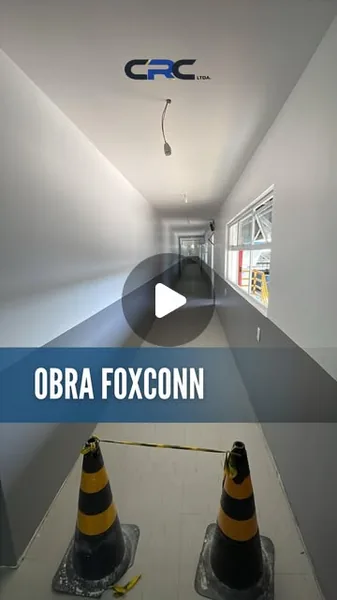
Foxconn Construction Management

Technical Management · 2025

View project
Maintenance

Roof Renovation: Panasonic

Roofing Renovation · 2024

View project
Industrial Renovation

Industrial Warehouse Renovation: MDA

Industrial Renovation · 2024

View project

See CRC in action.

See how we combine technical certification, construction management, and delivery precision on the largest industrial projects in Amazonas.

CRC Serviços de Engenharia institutional video at the Manaus Industrial Pole

Real projects. Real team. Real results.

Follow CRC's day-to-day work on the largest sites of the Manaus Industrial Pole (PIM), from structural lifting to certified delivery.

Follow@crc_ltdaand keep up with our projects in real time

View Instagram profile

Frequently Asked Questions

Direct answers about CRC, our services, and how we work

Where does CRC Serviços de Engenharia operate?

CRC Serviços de Engenharia operates in Manaus, in the state of Amazonas, with a focus on serving the Manaus Industrial Pole (PIM). It serves multinationals in segments such as electronics, automotive and technology at the region's industrial plants. Its headquarters is located in Manaus, and every project is carried out by in-house, specialized teams, with the technical manager directly overseeing each construction site.

What certifications and qualifications does CRC hold?

CRC holds a current ISO 9001 certification, which attests to our Quality Management System, and PBQP-H Level A (Brazilian construction quality program), the highest level of the program, which is required by the most demanding clients in the market. Our teams are trained and certified in the main regulatory standards applicable to industrial construction: NR-10, NR-12, NR-18, NR-33 and NR-35 (Brazilian regulatory safety standards). All of our technical managers hold active registration with CREA-AM, the Amazonas chapter of Brazil's engineering council.

Who are CRC's main clients?

We serve some of the largest multinationals in the Manaus Industrial Pole, including Samsung, Foxconn, Panasonic, Astemo (a joint venture between Honda and Hitachi Automotive) and BMW, in addition to medium and large domestic clients. Each of these clients requires rigorous bidding processes, specific technical certifications and the ability to perform work inside plants that remain in operation, conditions that CRC fully meets. This portfolio is our strongest proof of technical capability and reliability.

What is CRC's technical team structure like?

We have a robust administrative and technical team made up of civil engineers, engineering analysts, an architect, a works coordinator, an occupational safety professional, and procurement and finance managers. Project management is supported by specialized construction control software, and each project has a designated technical manager and a works coordinator present at the site every day. Our structure allows us to run multiple simultaneous projects without compromising the quality of any of them.

Is CRC a Manaus-based company or does it originate from another state?

CRC is a genuinely Manaus-born company, founded and headquartered in Manaus, with its entire operation rooted in the Manaus Industrial Pole and in the local network of suppliers and partners. This local origin is a real differentiator: we understand the logistical particularities of the Manaus Free Trade Zone, the climate, the regional suppliers, state legislation and, above all, the specific requirements of the multinationals installed in the PIM. We are not an outside contractor that opened a branch; we are from Manaus, for Manaus.

What services does CRC provide?

We carry out industrial civil construction and renovation projects in production plants, covering the construction of warehouses and production areas, industrial roof renovation and repair, electrical, plumbing and sanitary installations, fire protection systems (sprinklers, hydrants, suppression), internal factory infrastructure works, the construction of cafeterias and industrial administrative areas, gatehouses and access points, the retrofit of existing plants, and scheduled civil maintenance. We handle both greenfield projects (new construction) and brownfield projects (renovation and expansion of existing plants in operation).

Can CRC carry out work inside plants that remain in operation?

Yes, and this is one of the capabilities our clients value most. Carrying out work inside operating plants requires detailed phase planning, strict containment protocols, constant communication with the client's production and safety teams, and professionals trained to work in environments with severe restrictions on access, PPE, noise and waste. We have proven experience in this format, having delivered complete projects at Astemo's Plant 3 and at Panasonic's plant with the production line running during the work.

Does CRC carry out fire protection system projects?

Yes. We carry out complete installation projects for fire suppression systems, including sprinklers, industrial hydrants, fire protection piping and detection systems. These projects follow the ABNT NBR 13714 (automatic sprinkler systems) and NBR 17240 (fire detection and alarm) standards, and undergo approval by the Amazonas Military Fire Department. We performed this type of service at Astemo's Plant 3, with complete technical delivery and commissioning documentation.

How does CRC price its projects?

We work with different contracting models depending on the scope and the client's preference: lump-sum contracting (fixed scope with a fixed price), works administration (cost plus, in which the client pays the direct costs plus the management fee) and service provision by measurement. For more complex projects, we prepare a detailed technical proposal with a bill of quantities, a physical and financial schedule, and calculation records. We handle both direct contracts and formal bidding processes with sealed envelopes, as required by clients such as Astemo.

What is the minimum project size that CRC takes on?

We take on medium and large projects, generally with a contract value starting at R$ 100,000, both under lump-sum contracting and under works administration contracts. For recurring civil maintenance services, we offer monthly or quarterly scheduled maintenance contracts. We have no maximum scope limit: our technical and financial structure allows us to take on new construction projects and complex renovations across multiple simultaneous fronts within large industrial plants.

How does CRC ensure the quality of the work it delivers?

Quality management at CRC is governed by our ISO 9001-certified Quality Management System, which establishes standardized procedures for planning, execution, verification and corrective action across all projects. In practice, this means: a specific quality plan for each project, inspection checklists at each phase of execution, materials control with invoice traceability and test reports where applicable, systematic photographic records, and periodic follow-up meetings with the client. Non-conformities are recorded, analyzed and addressed with documented corrective action.

What safety measures does CRC adopt on its construction sites?

Occupational safety is CRC's non-negotiable priority. We implement the PCMAT (Working Conditions and Environment Program) on all projects with more than 20 workers, we conduct a safety induction before any worker enters the site, we require the use of PPE appropriate to the risk in 100% of activities, and we keep a Safety Technician present at the site every day. We work in compliance with NR-10, NR-12, NR-18, NR-33 and NR-35 (Brazilian regulatory safety standards), and we submit our safety procedures for approval by the client's SESMT (in-house occupational safety and health service) when required.

How does CRC manage subcontractors?

When we use subcontractors for specialized services, we apply to them the same quality and safety requirements demanded of our own team. Before hiring, we verify tax and labor compliance, the technical certifications applicable to the service, and the ability to comply with the project's standards. During execution, subcontractors go through our safety induction, are supervised by our works coordinators, and their services are inspected by our engineers. Technical responsibility to the client always rests with CRC, regardless of who performs the work.

Does CRC issue technical documentation after the work is completed?

Yes. At the end of each project, we deliver the set of technical documents defined in the contract, which typically includes: as-built records of the installations carried out (drawings updated to reflect what was built), signed commissioning checklists, ARTs (Brazilian technical responsibility annotations) from the engineers responsible for each discipline, a final photographic report, certificates for the materials used, and operation and maintenance manuals for the systems delivered. This documentation is essential for future maintenance and for any expansion of the installations.

How does CRC handle non-conformities during execution?

Non-conformities identified during the work are addressed through our formal RAC process (Record and Corrective Action). The process involves: immediate identification and recording of the non-conformity with a photo and location, root cause analysis, definition of a corrective action with an owner and deadline, execution of the correction, verification, and closure of the record. The client is informed of any relevant non-conformity and the action taken. This process is audited periodically as part of maintaining the ISO 9001 certification.

Does CRC take part in formal bidding processes?

Yes. CRC has proven experience in formal bidding processes with multinationals, including preparing a technical proposal with a bill of quantities, a descriptive memorandum, a physical and financial schedule, and submission in a sealed envelope. For public contracts, we hold all the qualification documentation required by Law 14.133/2021 (Brazil's new Public Procurement Law): federal, state and municipal tax clearance certificates, labor clearance certificate (CND), balance sheet, technical records with CREA, and proof of operational capacity. We have a team dedicated to preparing and following up on bidding processes.

How do I start a quotation or proposal process with CRC?

The first step is to get in touch by email at contato@engenhariacrc.com.br or through the website form, describing the project scope, the location of the work and the desired timeline. Our engineering team responds within 24 business hours to schedule a technical visit or request the additional information needed to prepare the proposal. More complex projects may require an on-site technical visit to the plant before pricing. We do not charge for preparing proposals.

Does CRC work with local suppliers and partners in Manaus?

Yes, and we make it a priority. We work with a network of local suppliers and partners for construction materials, specialized services, equipment rental and logistics. This reduces delivery times, supports the local economy and gives us the flexibility to respond quickly to site demands. For specialized services not available locally, we seek qualified partners with experience in the Manaus Free Trade Zone environment. Our partner network goes through the same qualification process we apply to subcontractors.

Does CRC meet the multinationals' vendor qualification requirements?

Yes. We go through the formal vendor qualification processes required by clients in the Manaus Industrial Pole, including completing technical questionnaires, presenting clearance certificates, technical records, ISO 9001 and PBQP-H certifications, a technical visit to our facilities when requested. Each client has its own specific process, and our team is well versed in conducting these procedures with agility and complete documentation as required.

Does CRC accept consortiums or partnerships with other engineering firms?

We assess consortium opportunities on a case-by-case basis, especially for large projects that require complementary capabilities or that demand combined financial capacity to demonstrate bidding ratios. In this model, we act both as the lead company of the consortium and as a consortium member, depending on the scope of each part. For operational partnerships in which another company assumes contract management and CRC performs part of the scope as a subcontractor, we also assess viability considering the compatibility of the project's technical and safety requirements.

Request a
technical assessment.

Our team responds within 24 business hours. For urgent projects, reach out directly via WhatsApp.

R. Leão de Judá, 262, Sala 01
Alvorada neighborhood, ZIP 69042-833, Manaus/AM
contato@engenhariacrc.com.br
+55 (92) 99212-5900 · WhatsApp
Subject Details Project Review

What is the reason for your contact?

Your contact details

Project details

Confirm your information

Manaus, Amazonas, Brasil
R. Leão de Judá, 262, Sala 01
Bairro Alvorada · CEP 69042-833 · Manaus / AM